 Home
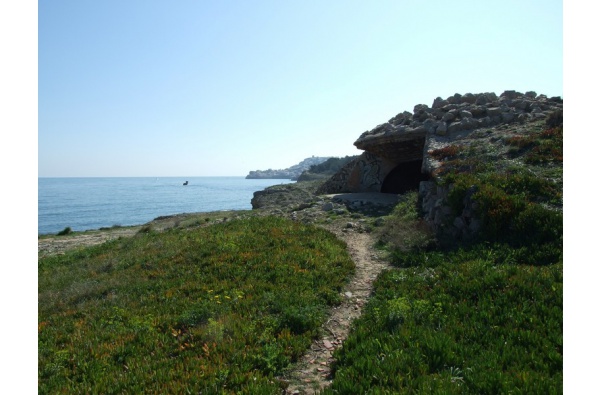
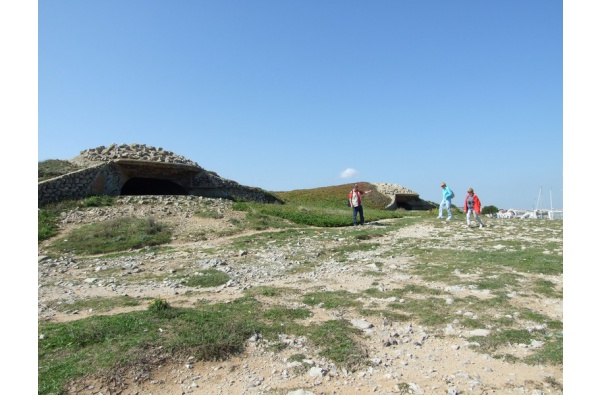
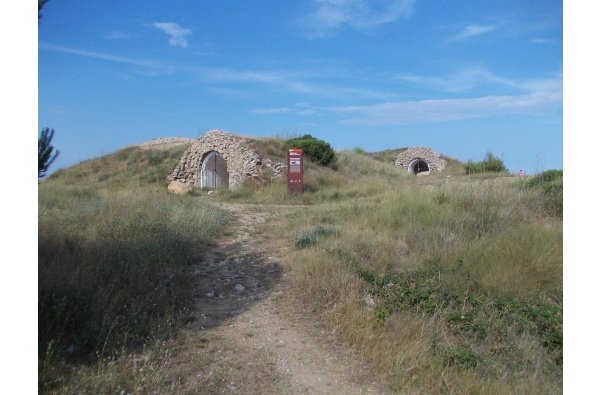
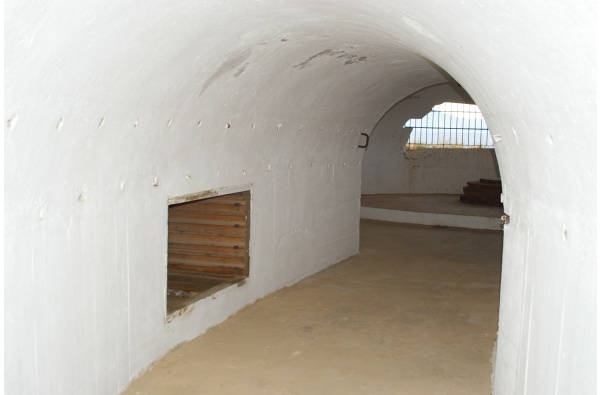
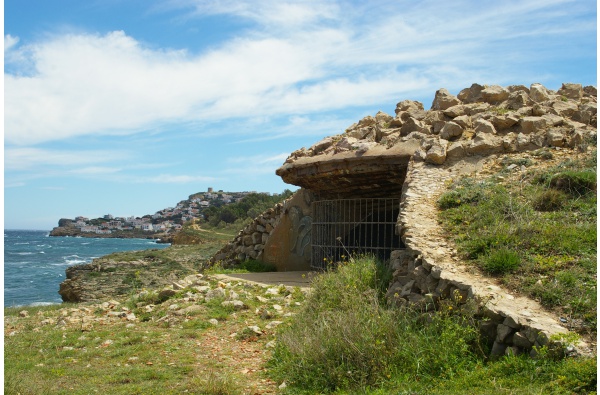
L’Escala , due to its location south of the Bay of Roses , has enjoyed a strategic position for defense since ancient times. We remember that in 218 BC it was the place chosen by the Roman army to land in the context of the Punic Wars and from that moment on, they began the Romanization of the Iberian Peninsula. Centuries later, numerous defense towers were built against piracy such as the Torre de Montgó , built in 1598, until the construction of bunkers during the Republican era and later those during the Franco era.
The Francoist government, in the context of the Second World War (1939-1945), built the battery called L-6, which formed the set of batteries to the north and south of the Bay of Roses, with the mission of defending against a hypothetical Allied attack.
The battery, which is now open to tourists, was built in the late 1940s, as part of the defensive plan developed by the Joint Artillery Commission for the Bay of Roses. It is part of one of the four batteries that defended this area. The battery is divided into two sections, each of which consists of two bunkers located symmetrically to the east and west and facing north and northeast. The bunker at the western end contained a machine gun nest that dominated the Clota Bay, which, before the construction of the port, was a natural shelter for ships and boats.
The bunkers were armed with four steel cannons from the Navy, which with slight modifications were converted into coastal defense cannons. The objective was to defend any landing on the Empordà coast and to fire at boats and amphibious vehicles.
In the political and strategic context, this was a very late and short-lived construction. It was conceived at a time when international pressure threatened the Franco regime, but in the 1950s, in the midst of the Cold War , it became completely obsolete. The cannons fell into disuse immediately and are not preserved.
The bunkers were restored with a grant from the Memorial Democràtic of the Generalitat de Catalunya , after many years of abandonment during which they had been the subject of numerous vandalism. The interior has been repainted and cleaned and metal enclosures have been installed in an attempt to guarantee their current state.
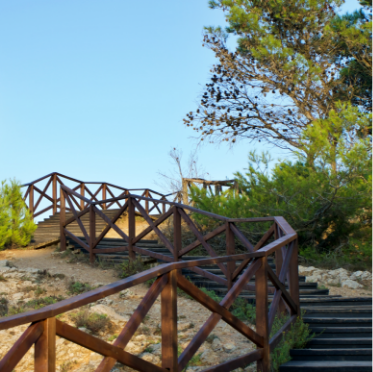
The interest, however, of this visit goes beyond the historical aspect, since these bunkers are located in an environment of high natural and landscape value, which made it included in the Montgrí, les Medes and Baix Ter Natural Park . Thus, the route includes a walk to discover the area of les Planasses, Bol Roig and Salpatx .
Follow us









 29°C


